Winter has come to Finland and nature is showing us its most beautiful side. Despite the cold all runners should head to forests and trails, because winter trail running is a wonderful experience – you just need to be prepared for the elements! Here’s a few tips on how to thoroughly enjoy those runs in sub zero temperatures.
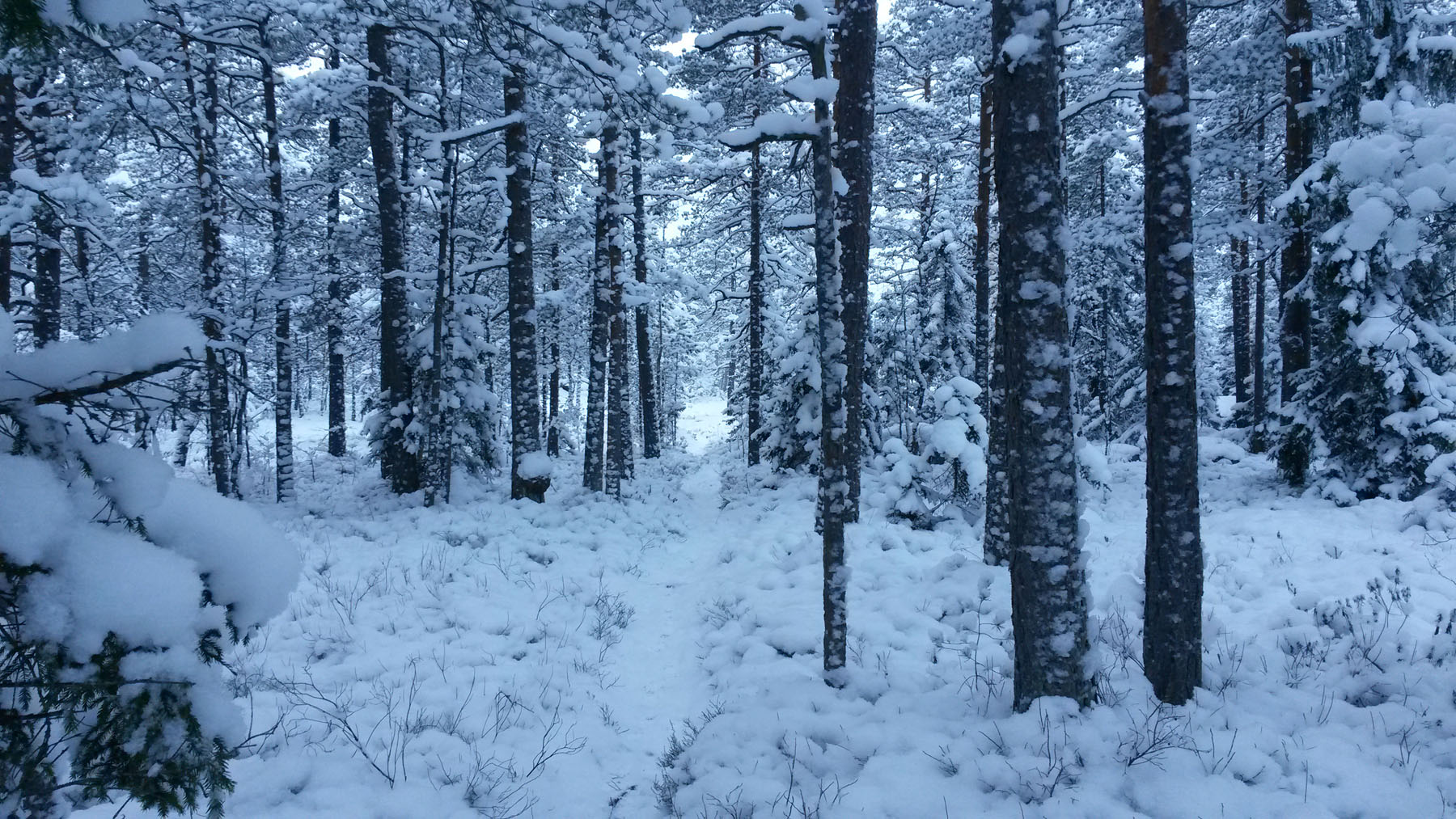
The Meikko recreational area in Kirkkonummi invites runners even during the winter. Photo: Anne Dahlgren
The right gear
The most important thing is to dress warmly enough. Woolen base layers, running tights, a middle layer or two and a shell jacket and pants should be worn. Cover your ears, neck and head with a Buff scarf and wear a heavy toque or two light ones. Two pairs of gloves or heavy mittens and, most importantly, water resistant runners that have room for two pairs of socks. Cover your ankles with gaiters that will stop snow from getting into your shoes and you will be warm enough!
When it comes to winter runners, the most common question is whether they should have spikes or not. If the weather is dry, regular winter runners without spikes will do the job. If, however, it is wet or slippery spikes are elementary. Otherwise running is not only anything but relaxed and enjoyable, but the risk of injury also grows exponentially. Spikes also come in handy on runs during early winter. Under the first thin layer of snow there is often a sheet of ice that runners notice only when it is too late – spiked shoes can prevent falling.
A headlamp is a a good companion for those evening runs during the winter. The most amazing experience, though, is to head away from the city lights and run under the light of a winter moon – you should definitely try!
New possibilities
Winter opens new dimensions for a trail runner. Before the heaviest snowfall the trails are crispy, sound and fast. You can take shortcuts over frozen lakes and ponds and find new routes and sceneries even in familiar surroundings. You should always keep in mind the risks of moving on ice and prepare accordingly!
After the heaviest snow falls, trail running changes completely. The most used trekking routes will stay clear throughout the winter, but there is less of a choice when it comes to trails to run on. This is not a problem though, as you can just run in the untouched snow – a traditional strength building exercise for runners. For a trail runner a great exercise is to do 5×5 intervals in knee deep snow. It’s not very fast, but it sure makes you stronger! Be sure to cover your ankles properly to make it enjoyable!

After the lakes freeze over they offer trail runners an endless variety of routes to choose from. Remember to only run on ice if you know it is strong enough! Photo: Terho Puustinen
The right attitude
You should think of winter trail running as a sport of its own. It is much slower than trail running in the summer, because a heavy set of clothes slow you down and the cold is a totally different challenge for you body. If your heart rate is higher than it should be, slow down and forget about tempo work. In stead of your watch you should concentrate on the beautiful scenery and enjoy the wonders wintery Finnish nature in offers you!
Things to consider
Running on trails during the winter has its own risks. What do you do if your shoes get wet in a swamp, that hadn’t yet frozen over? What if your fingers start to get numb and home is an hour away? If you get cold you can always pick up speed, but what if you fall and injure yourself and can’t make it out by running?
The best backup plan is to run with someone, in pairs or groups. You can find other runners here. Always carry your phone with you and secure it in something waterproof, run with a backpack that has a few extra layers and something to eat and drink.
Ensuring sufficient energy and hydration levels is difficult and calls for planning ahead. A lot of the energy bars will freeze and eating them will consume more energy than it gives you. When it comes to drinking, a backpack with a drinking straw might prove difficult, as the straw will most likely freeze shut. You should test what works for you!
You don’t necessarily need anything to eat or drink for a run up to a couple of hours, but sometimes you might want to run for longer. A thermos might be too big and heavy to carry, but if you fill a plastic water bottle with hot water and slip it into your backpack it will stay unfrozen for quite some time!
Mix it up!
Training in the cold freezes your muscles and slows you down. Just as with skiing, there is a temperature limit for running outside. If it is below -20 you should stick to indoor running for a change.
Winter offers numerous possibilities that are unavailable during other seasons. In addition to running, you can enjoy the outdoors snowshoeing, skating and skiing. Go out and enjoy!
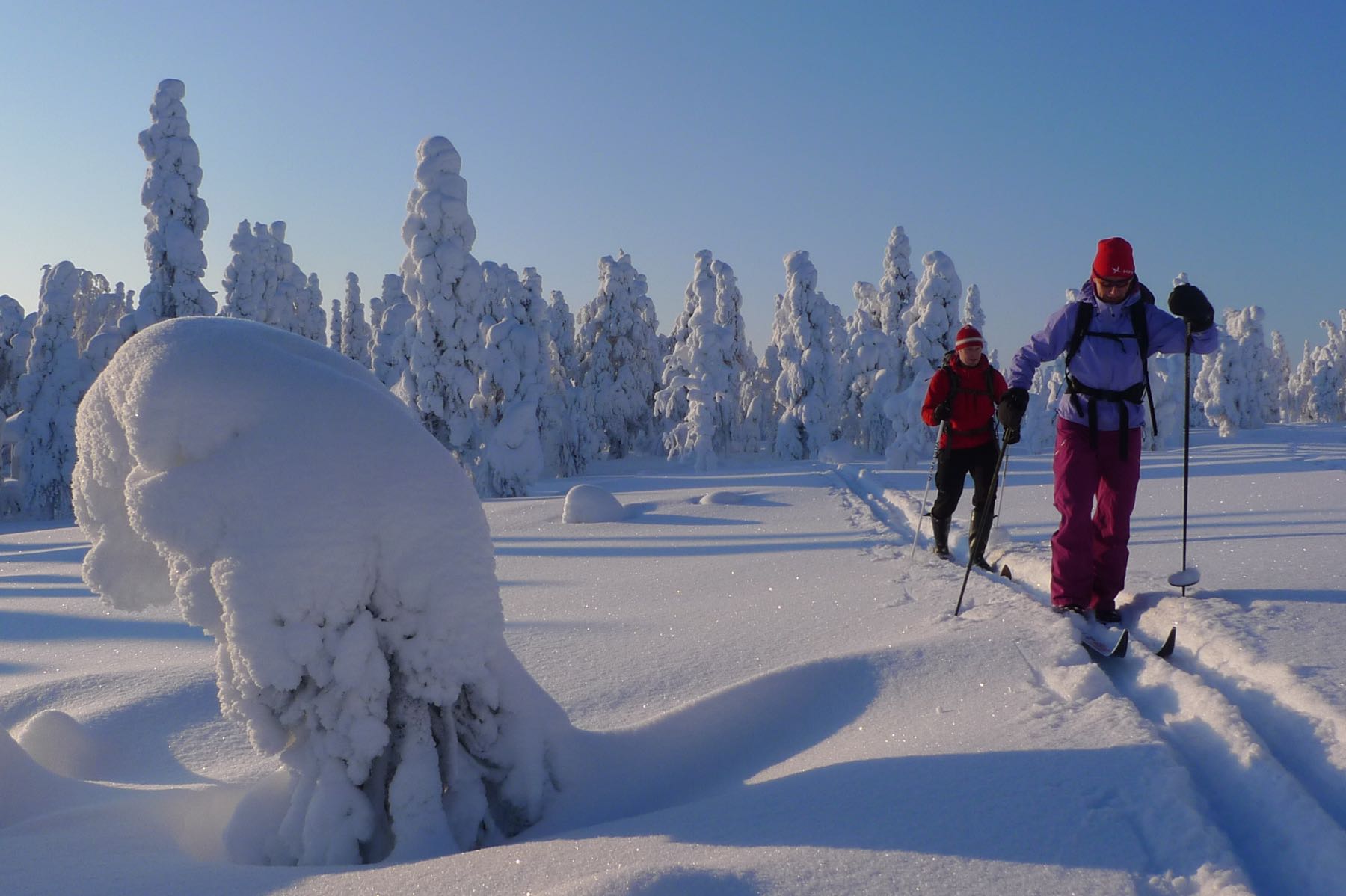
Skiing through the untouched snow is a wonderful experience. Photo: Terho Lahtinen